Your roadmap to mastering coding essentials and beyond.
Deferred Tools in LLMs: How Agents Use Thousands of Tools Without Loading Them All
An LLM agent may have access to a calculator, a browser, a code runner, GitHub, Slack, Jira, Google Drive, a database, and hundreds of internal APIs. Giving the agent more capabilities sounds useful. But there is a practical problem: every tool normally comes with a name, description, and input schema. If I place all of those definitions in every model request, the model has to read a large API catalog before it can answer a simple question. ...
AI Model Distillation Explained: Why Output Harvesting Is Not the Whole Story
Knowledge distillation transfers selected behavior from a larger teacher into a smaller student. The word distillation is doing too much work in today’s AI debate. In machine-learning research, it describes a family of methods for transferring knowledge from a teacher model to a student model. In product announcements, it often means training a smaller model from a larger model. In security discussions, the same word may describe collecting millions of responses from a competitor’s API. ...
Agent Client Protocol (ACP) Explained: The LSP for AI Coding Agents
AI coding agents are becoming more capable, but the way they connect to editors is still surprisingly fragmented. Imagine that an editor wants to support five coding agents. Without a shared protocol, the editor may need five custom integrations. Each integration has to handle prompts, streamed responses, file access, terminal output, tool calls, permissions, diffs, session history, and cancellation. The same problem exists on the other side. An agent developer who wants to support five editors may need to implement five different editor APIs. ...

DSpark Explained: DeepSeek's Confidence-Scheduled Speculative Decoding
DeepSeek recently open-sourced DeepSpec, a codebase for training and evaluating speculative decoding draft models, along with the DSpark paper and checkpoints. I wanted to understand what is actually new here, because speculative decoding itself is not new. The older idea is already powerful: use a small draft model to propose tokens, then let the large target model verify them. I explained that foundation in Speculative Decoding Explained. DSpark is interesting because it attacks two practical problems that show up when speculative decoding moves from a paper idea into production serving: ...
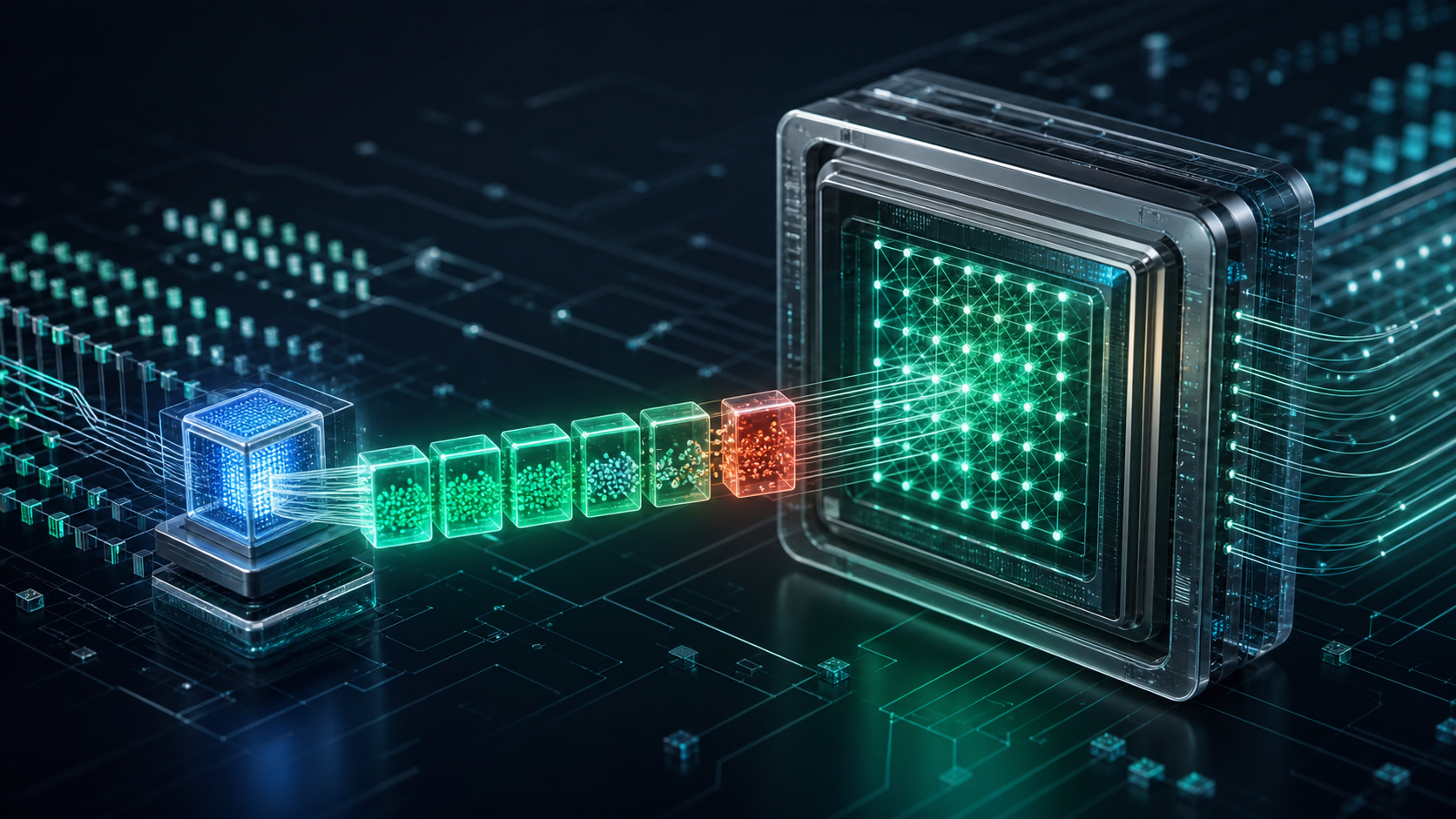
Speculative Decoding Explained: How LLMs Generate Faster Without Changing the Answer
Speculative decoding is one of the most important tricks behind fast LLM serving. The basic idea is simple: Use a small fast model to guess several future tokens, then use the original large model to verify those guesses in one pass. If the guesses are right, the large model moves forward by multiple tokens instead of one. If a guess is wrong, the large model corrects it and the system continues. ...
KV Cache Explained: Why LLMs Remember Keys and Values During Inference
The KV cache is one of those LLM inference terms that sounds simple until someone asks you to explain it from first principles. At a high level, the idea is: During generation, a transformer stores the previously computed key and value vectors, so it does not recompute them for the whole sequence every time it predicts the next token. That is the short answer. But the short answer hides the important part: why keys and values are reusable, why queries are not cached in the same way, and why this matters so much for latency. ...
Chrome DevTools Protocol (CDP) Explained: How It Works
Every web developer uses Chrome DevTools. We inspect elements, read console logs, watch network requests, throttle CPU, emulate mobile screens, record performance traces, check storage, debug JavaScript, and capture screenshots. Most of that feels like a browser UI. Under the hood, there is a protocol. That protocol is Chrome DevTools Protocol, usually shortened to CDP. CDP is the browser debugging API that lets tools instrument, inspect, debug, and profile Chrome, Chromium, and other Blink-based browsers. Chrome DevTools itself uses this protocol. Many automation and debugging tools also build on it directly or indirectly. ...
Chrome DevTools MCP: How Coding Agents Debug Real Browser Sessions
Coding agents are useful when they can read code, edit files, run tests, and explain errors. But web development has a problem that does not fit neatly inside the file system: the real bug often lives in the browser. A React component may look fine in code but overflow on mobile. An API call may fail only after a specific login state. A button may be present in the DOM but not clickable. A performance issue may come from layout shifts, long tasks, font loading, image decoding, or network waterfalls. A console error may point to bundled JavaScript that needs source maps to be useful. ...
WebMCP Is the Quiet Google I/O Announcement That Could Make Web Apps Agent-Ready
Originally published on DEV.to as a submission for the Google I/O Writing Challenge. At Google I/O 2026, the loud announcements were easy to spot: Gemini 3.5, Antigravity 2.0, Android agents, AI Studio upgrades, and a lot of new ways to build software with AI. The announcement I kept coming back to was much quieter: WebMCP. The Chrome docs describe it as a proposed open web standard that can be tested locally behind a Chrome flag and explored with demo apps. ...
Firestore Listeners vs WebSockets: How onSnapshot Works
Firestore has one of the most convenient real-time APIs in web and mobile development. We write a listener: import { collection, onSnapshot, query, where } from "firebase/firestore"; const q = query( collection(db, "messages"), where("roomId", "==", "general") ); const unsubscribe = onSnapshot(q, (snapshot) => { snapshot.docChanges().forEach((change) => { console.log(change.type, change.doc.id, change.doc.data()); }); }); After that, the UI updates whenever matching documents are added, modified, or removed. It feels similar to a WebSocket because the browser receives real-time updates without manually polling. But Firestore listeners and WebSockets are not the same abstraction. ...