How We Added a Developer Tools Section in Hugo (Client-Side Only)

We recently added a dedicated Developer Tools section to Learn Code Camp and shipped multiple utility tools in one go. The goal was simple: Client-side only. Your data stays in your browser on this page. That requirement shaped every implementation choice. What We Added We added a new /tools section with these live tools: JSON Formatter + Validator Base64 Encode/Decode URL Encode/Decode UUID Generator (v4) Unix Timestamp Converter JWT Decoder Regex Tester Text Diff Checker Hash Generator (SHA-256, MD5) Why Client-Side Only? For utility tools, people often paste sensitive payloads: tokens, configs, logs, API responses, and JSON with private fields. ...
February 24, 2026 · 3 min · Nitin

How Much GPU VRAM Do You Need to Run Large Language Models?

If you’re planning to run open-weight LLMs locally or in production, one of the first questions is: How much GPU VRAM do I actually need? The answer depends on three major components: Model weights KV cache (context memory) Runtime overhead Let’s break each one down clearly and practically. 1️⃣ Model Weights: The Base Memory Cost The largest fixed memory cost comes from the model weights. Simple Formula Weights (GB) ≈ Parameters (in billions) × (bits per weight / 8) ...

February 16, 2026 · 4 min · Nitin
Migrating WordPress to Hugo with Cloudflare Pages

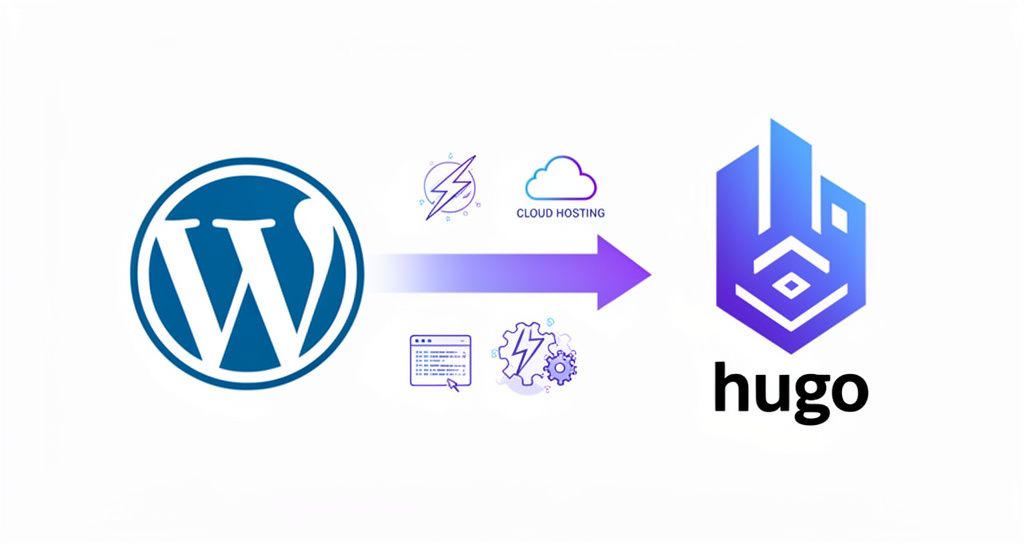
How to Migrate WordPress to Hugo with Decap CMS and Cloudflare Pages (Free Hosting)

Why Migrate from WordPress? WordPress is powerful, but for a technical blog that mostly serves static content, it comes with unnecessary overhead — hosting costs, plugin updates, security patches, and slower page loads. Static site generators like Hugo offer a simpler, faster, and cheaper alternative. Here’s what we migrated to: Hugo — blazing fast static site generator PaperMod — clean, minimal theme perfect for tech blogs Decap CMS — web-based content management with GitHub backend Cloudflare Pages — free hosting with global CDN Google AdSense — preserved auto ads from the WordPress site The result? A site that builds in under 1 second, costs $0/month to host, and is served from Cloudflare’s global edge network. ...

February 8, 2026 · 5 min · Nitin

Agentic Vision in Gemini 3 Flash: Turning “Seeing” into an Active Investigation

Frontier vision models have gotten really good at understanding images — but they’ve also had a consistent weakness: They still often treat an image like a single static glance. So if the answer depends on something tiny (a serial number, a distant street sign, a gauge reading, a small UI label), the model might miss it… and then it has to guess. Google’s new capability called Agentic Vision, launched with Gemini 3 Flash, is a major step toward fixing that. ...

January 29, 2026 · 5 min · Nitin

Understanding LLM Inference Basics: Prefill and Decode, TTFT, and ITL

Large language models (LLMs) like GPT-4, Llama, or Grok generate text by running inference — the phase where a trained model produces outputs from a given input prompt. While training is resource-intensive and done once, inference happens every time a user sends a query. Understanding the mechanics of inference is key to grasping why some models feel “fast” while others lag, and why certain optimizations matter. At a high level, modern LLM inference (for autoregressive transformer-based models) splits into two distinct phases: prefill and decode. These phases behave very differently in terms of computation and directly affect two critical user-facing metrics: Time to First Token (TTFT) and Inter-Token Latency (ITL). ...

December 21, 2025 · 5 min · Nitin

Analysis of open ai home directory

Recently, someone shared a screenshot on x.com, how to download OpenAI Home Directories. I tried it, and it works. In this blog, we will now try to understand exactly what the contents of this home directory are. working with GPT-5.2 thinking with gpt 5.2, i got error zip file not found. https://t.co/c1zTfBlWb9 pic.twitter.com/85tEv28MuJ — Nitin Kalra (@nkalra0123) December 13, 2025 Let’s analyse the contents Inside the open ai home directory oai/ Folder: Slides, Docs, PDFs, and Spreadsheets Tooling This folder is a small toolkit for working with common “office” artifacts – PowerPoint decks, DOCX files, PDFs, and spreadsheets. It combines a few Python utilities with a set of practical guides that describe the preferred tools and a quality-check workflow (render → visually inspect → iterate). ...

December 13, 2025 · 5 min · Nitin

Managing Multiple Python and Java Versions: A Developer’s Guide to pyenv and SDKMAN

Introduction As developers, we often find ourselves juggling multiple projects, each requiring different versions of Python or Java. Maybe you’re maintaining a legacy application that runs on Python 3.8 while building a new microservice on Python 3.12. Or perhaps you’re working with Java 11 for one client and Java 21 for another. Manually managing these versions can quickly become a nightmare of PATH variables, symlinks, and “it works on my machine” debugging sessions. ...

November 14, 2025 · 8 min · Nitin

Debugging HTTP Traffic Like a Pro: HTTP Toolkit and Terminal Interception

Introduction If you’ve ever stared at a cryptic error message from a CLI tool wondering “What HTTP requests is this thing actually making?”, you’re not alone. Whether it’s a failed git clone, a mysterious npm install error, or tracking claude code for finding prompts, finding out what data your application sends to third-party services, understanding HTTP traffic is crucial for modern development. Enter HTTP Toolkit – an open-source powerhouse that makes intercepting and debugging HTTP traffic almost effortless. ...

November 5, 2025 · 6 min · Nitin

How to Stop Hallucinations in RAG Chatbots: A Complete Guide

Hallucinations in RAG (Retrieval-Augmented Generation) chatbots can undermine user trust and lead to misinformation. In this comprehensive guide, we’ll explore proven strategies to minimize these AI-generated inaccuracies and build more reliable chatbot systems. If you’re building a RAG chatbot, you’ve likely encountered the frustrating problem of hallucinations—when your AI confidently provides incorrect or fabricated information. The good news? There are effective, battle-tested solutions to dramatically reduce these errors. Let’s dive into the multi-layered approach that actually works. ...

November 3, 2025 · 5 min · Nitin

Agentic Context Engineering (ACE): Turning Context Into a Self-Improving Playbook for LLMs

Large language models are getting smarter—but the real superpower may be how we feed them context. Instead of constantly fine-tuning weights, a growing family of techniques improves models by upgrading the inputs they see: richer instructions, reusable strategies, domain heuristics, and concrete evidence. The paper “Agentic Context Engineering: Evolving Contexts for Self-Improving Language Models” proposes ACE, a practical framework that treats context like an evolving playbook—something you grow, refine, and curate over time to make agents and reasoning systems measurably better. ...

October 22, 2025 · 9 min · Nitin